7 raisons pour lesquelles les familles ajoutent cette batterie externe solaire à leur kit d’urgence cet hiver

In the space of a few weeks, governments on both sides of the Atlantic have sent their citizens the same message.
On October 22, the UK government launched "Be Ready", asking every household to prepare for three days of disruption. In September, Ireland began mailing an emergency booklet to 2.2 million homes. In the US, FEMA spent September telling families to "stand ready." Across Europe, households are now asked to manage on their own for at least 72 hours.
Then the weather made the point for them.
October 2026, in brief
- Oct 24–25 · UK & France: Two back-to-back storms. More than 400,000 homes in Britain lost power at some point. In France, 288,000 homes were dark at the peak.
- Oct 25 · Germany: Near Freiburg, the blackout took the mobile network down with it.
- Oct 22 · UK: Government launches "Be Ready": prepare for three days, keep a fully charged power bank.
- Oct 12 · Australia: One sudden storm cuts power to about 9,000 properties in Alice Springs.
- Oct 9 · USA: Hurricane Isaias leaves hundreds of thousands of customers across the Southeast without power.
Every one of those lists agrees on one thing: keep a charged power bank.
None of them answer the obvious next question: what happens on day two, when it's empty?
Officials are open about why they're asking: extreme weather, cyberattacks and an uncertain world. Nobody is saying the lights will go out tomorrow. They're saying the next outage could last longer than your phone battery.
The missing piece in most kits isn't another small charger. It's a power bank big enough for the whole family that refills itself from the sun when the outlets are dead. And it fits in a go-bag.
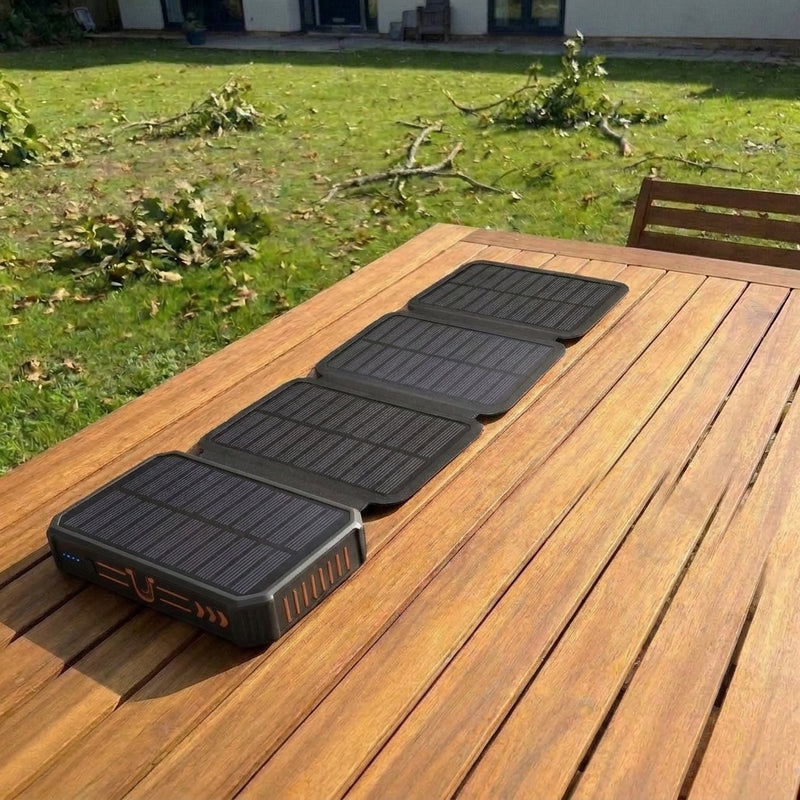
1. It Refills Itself From the Sun. No Fuel, No Cord, No Outlet.
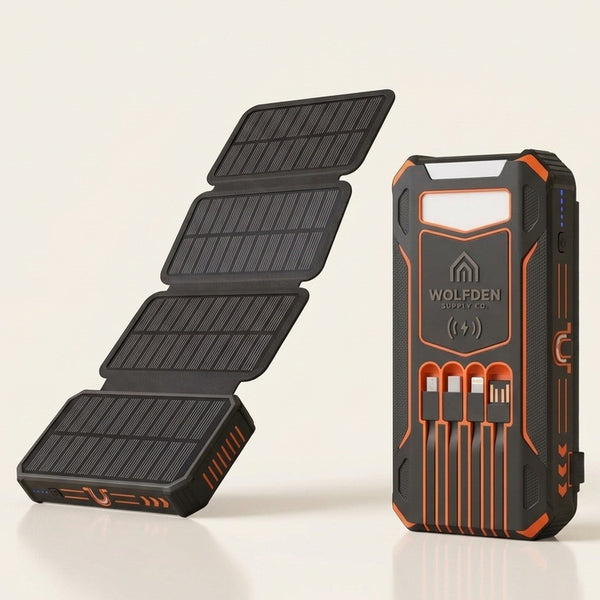
When the grid goes down, every socket in the house goes dead at once. This power bank doesn't need one. Unfold its four solar panels, lay it in the sun, and every hour of daylight puts power back in. No fuel to buy. No cable to the street. No noise.
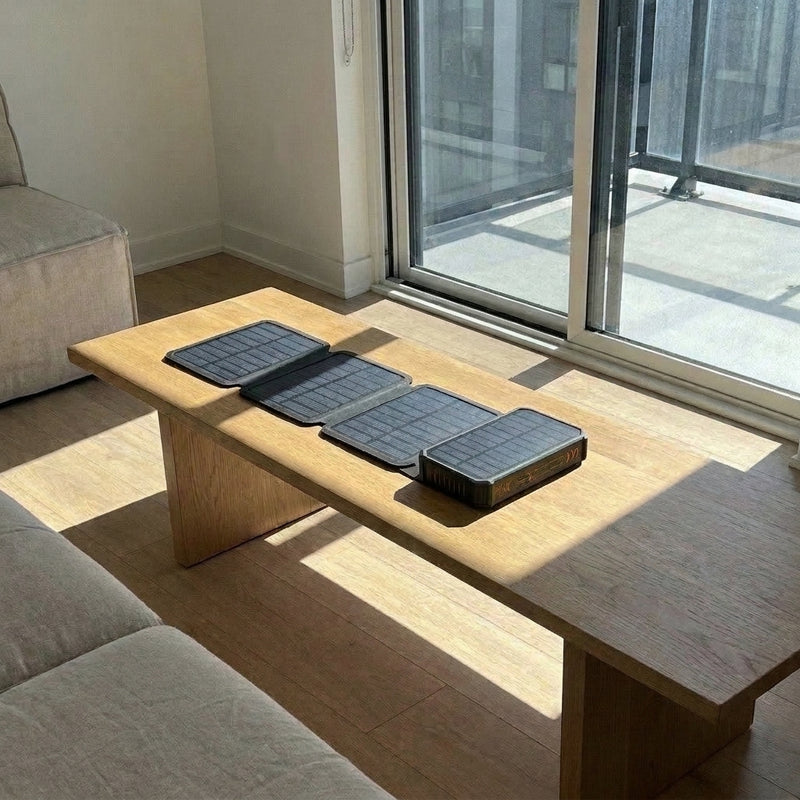
2. It's the Power Bank on Every Official List. And It Doesn't Stay Empty.
Every government checklist says the same thing: keep a charged power bank. The problem is that most power banks only last until they're empty. Then they're just a brick in a drawer.
This one ticks that box on day one and keeps going after. Charge it from the wall before the storm. When it runs low, four solar panels start refilling it.

3. A Real 48,000mAh: Enough for the Whole Family, for Days
Here's what most people learn the hard way: a lot of power banks print a big number on the box and deliver a fraction. You find out when the lights are already off.
This one holds a real 48,000mAh, about 178Wh. That's multiple full charges for every phone in the house through a multi-day outage, not just one quick top-up.

4. Anyone in the House Can Use It in Seconds
No adapters, no setup, no manual. The cables are already on it, so nobody hunts for a cord in the dark. Press one button and the built-in LED light turns it into a lamp. Auto shut-off stops charging when a device is full. When it needs a refill, unfold the panels toward the sun and fold them back when you're done.
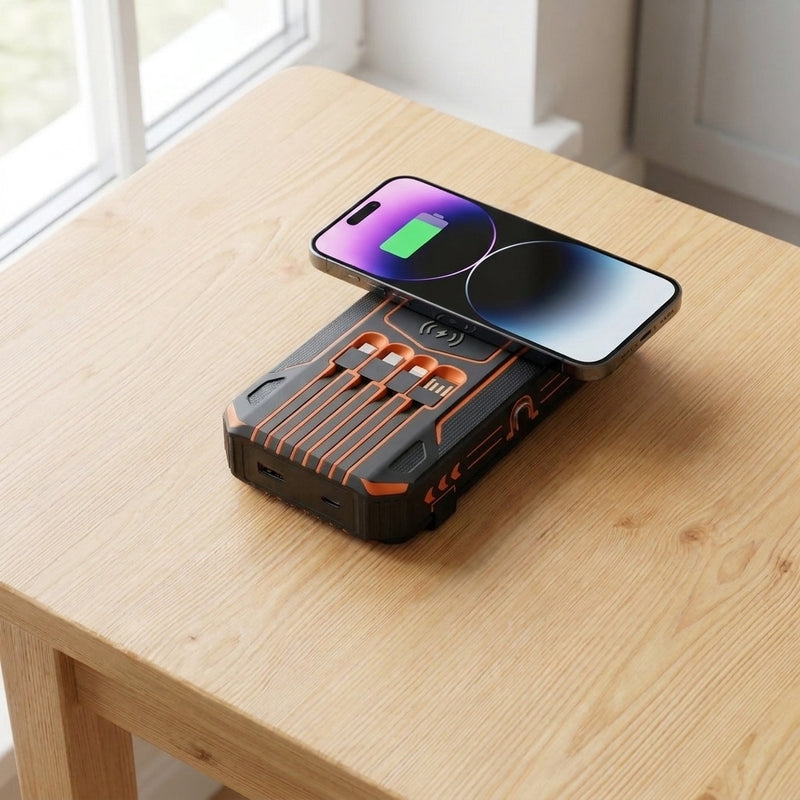
5. Keep Every Phone Alive. Stay Connected.
4 built-in cables: iPhone (Lightning), USB-C, Micro-USB and USB-A
Magnetic wireless pad: snap on a MagSafe-compatible iPhone
Extra ports: 2× USB-A and 1× USB-C for your own cables
No plugs, no adapters and no voltage worries. USB works the same in every country.
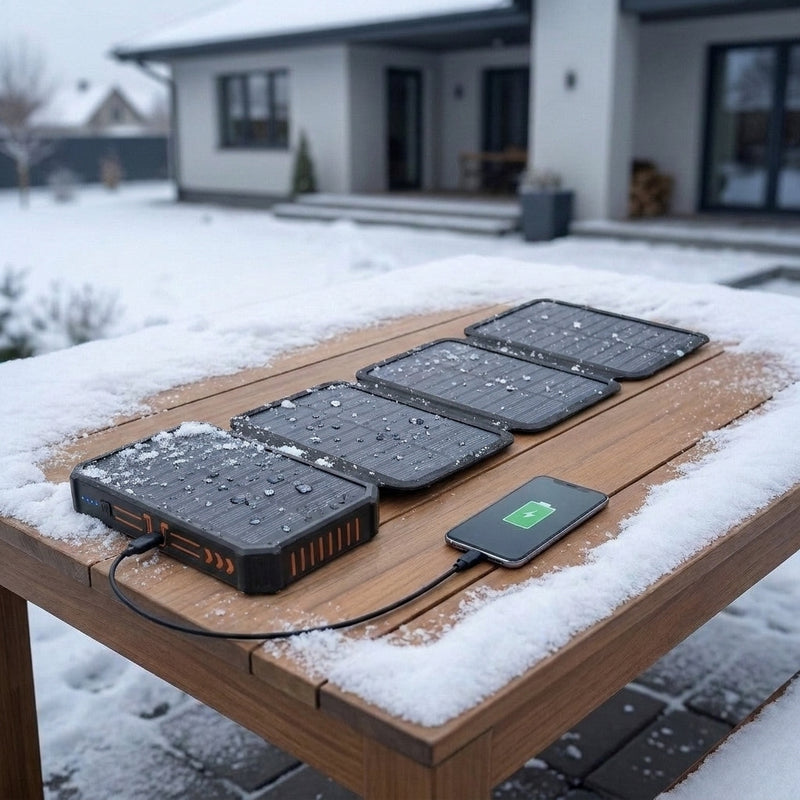
6. Built for Bad Weather: Waterproof, Shockproof, Dustproof
Most power banks are made for a desk. This one is made for a storm. Silicone hinges seal the folds between the panels, and the body shrugs off rain, drops and dust. It fits in the go-bag next to the flashlight, so if you ever have to leave fast, your power comes with you.
7. How to Use It: 3 Simple Steps
1. Charge it full. Plug it into the wall before the storm. Any USB wall adapter works.
2. Plug in. Use the built-in cables or the magnetic pad. Several phones can charge at once.
3. Unfold to the sun. When it runs low, open the four panels and let the sun refill it.
Ways to Keep Your Phones On When the Grid Goes Down
| Wolfden Solar Power Bank | Fuel Generator | Ordinary Power Bank | Power Station | |
|---|---|---|---|---|
| Works when fuel stations are closed | ✓ | ✗ Needs fuel | ✓ Until empty | ✓ Until empty |
| Safe to use right by the house | ✓ | ✗ Outdoors only | ✓ | ✓ |
| Refills itself from the sun | ✓ 4 built-in panels | ✗ | ✗ | ✗ Panels sold separately |
| Silent | ✓ | ✗ | ✓ | ✓ |
| Goes in a go-bag | ✓ | ✗ 20+ kg | ✓ | ✗ 5–15 kg |
| Charges the whole family | ✓ 4 cables + wireless | ✓ | ~ 1–2 phones | ✓ |
The Warnings Are Out. The Rest Is Up to You.
Governments have done their part. They've issued the warnings, mailed the booklets and published the checklists: be ready for three days, keep a charged power bank.
What no government can do is keep that power bank charged once the grid is down. That part is up to you. With one that refills itself, it takes ten seconds and a patch of sun.
Most people read a warning and mean to get to it. The families who are ready when the lights go out are the ones who acted before the next outage, not after it.
Frequently Asked Questions
How many phone charges does it hold?
Multiple full charges for every phone in the house. It's a real 48,000mAh (about 178Wh), not an inflated number.
How fast does it charge from the sun?
Solar is slower than the wall, on every solar power bank. Charge it full from the wall before the storm, then let the sun top it back up when the outlets are dead. Four panels catch more sun than a single-panel bank.
Does it work on cloudy days?
Yes, but slower, like every solar panel. Bright sun is where it shines.
Will it charge my iPhone?
Yes, two ways: snap a MagSafe-compatible iPhone onto the magnetic pad, or use the built-in Lightning or USB-C cable.
Will it work in my country?
Yes. Every port is USB, so it works the same everywhere. To charge it from the wall, use any USB wall adapter (not included).
Is it waterproof?
Yes: waterproof, shockproof and dustproof, with silicone hinges sealing the folds. Rain or a wet bag won't stop it. Just don't leave it underwater.
Can I take it on a plane?
Not in a carry-on. At about 178Wh it's over the airline limit. It's built for the house, the car and the go-bag.
What if it's not for me?
You have 30 days to send it back for a full refund.